
Starlink Mini 2: A Better Portable Starlink, but a Worse Starlink for Your Van?
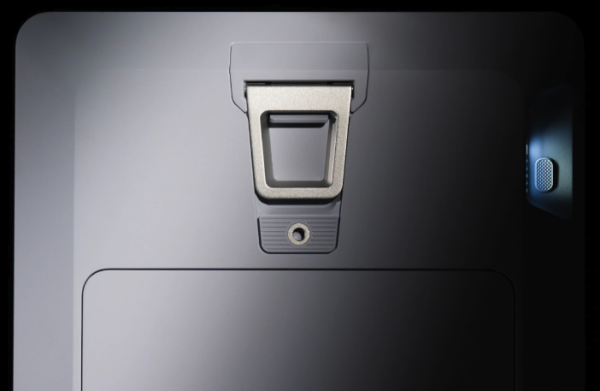
The new Starlink Mini 2 finally delivers on the promise of a genuinely portable, self-contained satellite internet terminal. But in addressing the limitations of the original Mini, has Starlink inadvertently made its successor less suitable for campervans, motorhomes and permanent off-grid installations?
Following our recent articles looking at the Starlink Mini 2 and the new Starlink V5, I've had several conversations with customers considering whether to invest in the original Mini or wait for the next generation of Starlink hardware.
One of those conversations prompted me to look more closely at some of the practical implications of permanently installing the Mini 2 on the roof of a vehicle.
And the more I consider those implications, the less convinced I am that the Mini 2 represents an upgrade for this particular application.
That's not to say the Mini 2 isn't an impressive piece of hardware. Rather, I think it's worth making a distinction between portable connectivity and permanently installed mobile connectivity.
The two are not necessarily the same thing.
Has Starlink finally delivered the product it originally intended?
When the original Starlink Mini was introduced in 2024, much of Starlink's marketing focused on its portability.
The idea of carrying a Starlink terminal in a backpack and heading into the wilderness was certainly appealing. However, there was one rather significant limitation: you still needed to carry a separate power source.
Whilst the original Mini could be powered from a suitable external battery or USB-C power bank, it wasn't an entirely self-contained solution.
The Mini 2 addresses this beautifully.
With a removable 71 Wh battery, up to four and a half hours of battery-powered operation, native USB-C power and an improved WiFi 6 router, the Mini 2 delivers something much closer to that original vision.
You can take it out of your backpack, position it with a clear view of the sky and be connected without having to worry about external cables or power supplies.
For hikers, campers, photographers, temporary deployments and remote working in the wilderness, it's a very compelling proposition.
But something interesting has happened in the two years since the original Mini was released.
An established community of campervan, motorhome, expedition vehicle and boat owners has adopted the original Mini as a permanently installed, low-power satellite internet solution.
An entire ecosystem of mounting systems, DC power supplies, cables and networking accessories has developed around it. Arguably some of the best solutions for permanent installation offered by Starvmount.
And many of the features introduced with the Mini 2 to improve its portability potentially make it less practical for those installations.
Why put another battery on the roof of your van?
The headline feature of the Mini 2 is undoubtedly its removable battery.
For someone carrying Starlink in a backpack, that's an enormous improvement.
For someone who already has a substantial 12 V or 24 V leisure battery system in their vehicle, I'm not entirely sure what problem it solves.
In fact, it potentially introduces several new ones.
Battery longevity and environmental temperatures
Lithium batteries are generally better suited to relatively moderate operating and storage temperatures.
Prolonged exposure to high temperatures can accelerate battery degradation, whilst charging at very low temperatures requires careful management to prevent damage to the cells.
The roof of a campervan is not necessarily the ideal location for a lithium battery.
During the summer, a terminal mounted flat on the roof may be exposed to direct sunlight for extended periods, potentially reaching temperatures considerably higher than the surrounding air.
During the winter, that same terminal could spend weeks exposed to freezing temperatures.
There is also the question of how the battery is managed when the Mini 2 remains permanently connected to an external power supply.
Does Starlink provide a battery preservation mode? Can the maximum charge level be limited? Can the battery be bypassed entirely when external power is available?
Starlink has confirmed an IP67 environmental rating for the Mini 2, but resistance to water and dust is not the same thing as suitability for continuous battery storage and charging under extreme temperature conditions.
I'm not suggesting that Starlink hasn't considered these issues. However, without more information about its battery management system, charging temperature limits and long-term operating behaviour, these remain legitimate considerations for a permanent roof installation.
Is the battery another potential security concern?
One of the advantages of the existing Starlink Mini is that the terminal itself has relatively limited value to someone who steals it.
Once associated with a Starlink account, the terminal cannot ordinarily be activated by another user without being released from the original owner's account.
Beyond selling the hardware for spares or attempting to sell it to an unsuspecting buyer, its usefulness is limited.
The Mini 2 introduces a separately replaceable battery, which can also function as a USB-C power source.
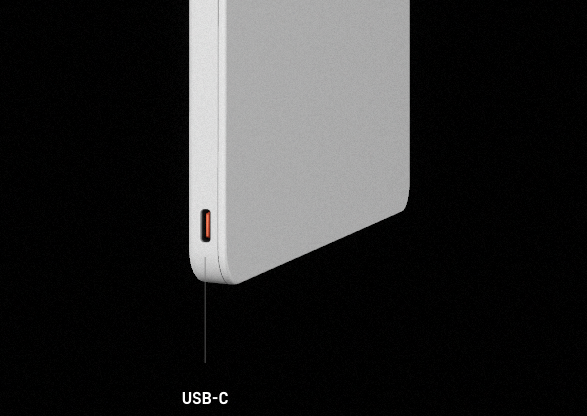
That potentially creates a component with an independent resale value.
Whether the battery can be adequately secured when permanently mounted remains to be seen, but it's another consideration that simply doesn't exist with the original Mini.
USB-C power: an improvement or a limitation?
Starlink's decision to move to USB-C Power Delivery (PD) makes perfect sense for a portable terminal.
Being able to power and charge the Mini 2 using compatible USB-C power supplies and portable power banks is a significant advantage for anyone travelling with other USB-C powered devices.
But for permanent vehicle installations, the original Mini's DC power architecture has some distinct advantages.
The original Mini accepts a 12-48 V DC input, allowing us to use a regulated 48 V DC supply to minimise voltage drop over longer cable runs.
Starlink itself supplies the original Mini with a 15 m DC power cable.
This provides considerable flexibility when positioning the terminal on the roof and the DC power supply close to the vehicle's leisure battery.
The Mini 2, by comparison, is supplied with a 60 W USB-C power supply and a 3 m USB-C cable.
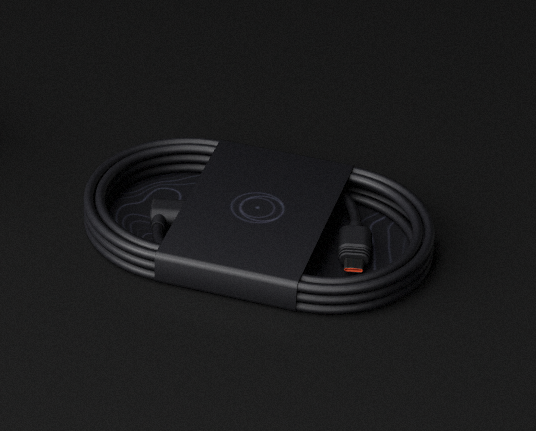
Whilst longer USB-C cables are technically possible, reliably delivering power over extended cable lengths introduces additional considerations around cable resistance, voltage drop and Power Delivery negotiation.
For the moment, I would regard approximately 3 m as a sensible starting point when planning a Mini 2 installation, until longer cable arrangements have been properly tested.
Depending on the layout of your campervan or motorhome, that could be quite restrictive.
It may become necessary to position the USB-C PD power converter closer to the terminal, extending the vehicle's DC supply to the converter rather than running a longer cable from the converter to the terminal.
It's not an insurmountable problem, but it is a different installation architecture.
Perhaps the biggest unknown: how do you switch it on and off?
This is potentially the most significant consideration for anyone planning a permanent installation of the Mini 2.
With the original Mini, power control is remarkably straightforward.
You switch on the external DC power supply and the terminal boots up. You switch off the power supply and the terminal shuts down.
There is no need to physically access the terminal.
For a campervan or motorhome owner, this means Starlink can be controlled using a simple switch inside the vehicle, a relay integrated with the vehicle's electrical system or potentially a more sophisticated energy management system.
The Mini 2 introduces both a battery and a physical power button, which could fundamentally change how this works.
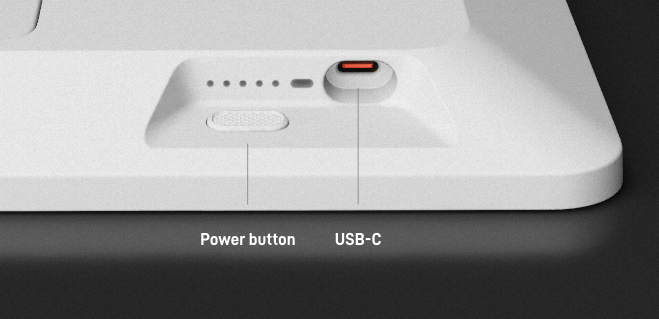
There are several questions that Starlink has yet to answer explicitly.
- Can the Mini 2 operate normally with its battery completely removed?
- Is the physical power switch latching or non-latching?
- Will the terminal automatically start when external USB-C power is connected?
- What happens when external power is disconnected whilst the battery remains fitted?
- Can the terminal be switched on and off remotely through the Starlink app?
- If the battery is completely depleted, will restoring external power restart the terminal or simply recharge the battery?
Depending on the answers, the Mini 2 could either be perfectly suitable for a permanent installation or considerably less convenient than the original Mini.
Scenario 1: Battery-free operation and a latching power switch
This would potentially be the ideal scenario for permanent vehicle installations.
If the Mini 2 can operate with its battery removed and the physical switch retains its ON position when power is disconnected, we could effectively replicate the behaviour of the original Mini.
The power switch on the terminal would be left in the ON position, with the USB-C PD power supply switched on and off from inside the vehicle.
The additional battery would no longer be a concern, either from a temperature management or security perspective.
The Mini 2 could then become a very viable option for a permanent installation.
Scenario 2: Battery-free operation and automatic restart
A mechanically latching switch isn't necessarily a requirement.
Even with a non-latching power button, Starlink could implement firmware that automatically starts the terminal when external power is restored.
This is a familiar feature on computers and other networking equipment that need to recover following a power failure.
Provided the Mini 2 supports battery-free operation, this would achieve much the same result as a latching switch.
Again, the terminal could be controlled entirely by switching its external power supply.
Scenario 3: Battery-dependent operation and a non-latching power switch
This is where things could become considerably more complicated.
If the battery must remain installed and the terminal behaves in a similar way to many other portable electronic devices, disconnecting the external power supply may simply cause the Mini 2 to continue operating from its internal battery.
Switching Starlink off from inside your van wouldn't actually switch Starlink off.
Instead, it could continue operating for several hours until its internal battery becomes depleted.
When external power is subsequently restored, there is a possibility that the battery would begin charging without the terminal automatically switching back on.
If a physical press of the power button is then required, we have a rather obvious problem.
Nobody wants to climb onto the roof of their motorhome every time they want to switch on their internet connection.
Could the Starlink app provide a solution?
Potentially.
Starlink could introduce an option within the app to remotely switch the Mini 2 on and off or configure its behaviour when external power is connected or disconnected.
However, switching a terminal off remotely is considerably easier than switching it back on.
If the terminal is completely powered down, its WiFi connection would ordinarily no longer be available. There would need to be some means of waking the terminal, potentially through a low-power Bluetooth connection or another standby mechanism.
And if the battery has been removed and the external power supply disconnected, there would be no source of power to maintain even that standby functionality.
In that situation, app-based control would still require some form of automatic startup or wake capability when external power is restored.
It's quite possible that Starlink has already considered all of this.
But until we can establish exactly how the Mini 2 behaves, these are questions rather than answers.
What about the WiFi router?
Another consideration is the apparent absence of a dedicated Ethernet connection on the Mini 2.
Whilst the improved WiFi 6 router is a welcome development, the benefit of improved wireless coverage is potentially diminished when the router is positioned outside a vehicle with a metal roof or foil-backed insulation.
One of the advantages of the original Mini is the ability to connect a separate WiFi router inside the vehicle using its Ethernet port.
This also provides the option of integrating Starlink into a broader connectivity system incorporating a 4G or 5G router, automatic WAN failover and other networking equipment.
It's possible that the Mini 2 will support wired networking through its USB-C connection, potentially using a suitable adapter.
However, Starlink has yet to confirm this functionality or how simultaneous power delivery and wired networking would be implemented.
For anyone who has invested in a more sophisticated vehicle connectivity system, this is another reason not to assume the Mini 2 will be a straightforward replacement for the original.
Then there's the price
When the original Starlink Mini launched in the UK in August 2024, it cost £399.
And that didn't include a battery.
At the time of writing, on 24 November 2026, the original Mini is listed at £125 from Currys.
I genuinely think we could be approaching the lowest price we are likely to see for the original Mini, particularly if Starlink eventually phases out the hardware in favour of the Mini 2.
Of course, nobody can predict future retail pricing or clearance offers, but at £125 it represents exceptional value.
Meanwhile, the initial invitation-only US pre-order offer for the Mini 2 is $999 USD, including a full year of Roam Unlimited service.
For someone who requires satellite internet throughout the year, that could represent a very attractive package.
But it's somewhat at odds with how many campervan and motorhome owners use Starlink.
One of the attractions of Starlink Roam is the flexibility to manage your subscription around when you are travelling, rather than committing to a full year of service.
There is currently no confirmed standalone hardware price for the Mini 2, nor a confirmed UK launch date or pricing structure.
For those considering a permanent installation today, I find it difficult to make a compelling financial argument for waiting.
Is the Starlink V5 actually the successor we're waiting for?
As I discussed in our recent article, Starlink V5: The Perfect Dish for Campervans and Boats? There's a Catch., I remain particularly interested in the potential of the new Starlink V5.
From a hardware perspective, it offers many of the characteristics we look for in a permanent vehicle installation:
- A compact and lightweight terminal.
- Relatively low power consumption.
- No integrated battery.
- A single cable carrying power and data.
- A separate WiFi router that can be positioned inside the vehicle.
- An installation architecture better suited to longer cable runs.
In many respects, the V5 looks like the natural evolution of permanently installed Starlink connectivity.
The problem, of course, is that Starlink currently positions the V5 as a residential terminal, with Roam service and in-motion operation not presently supported.
There is also no confirmed date for general UK hardware availability.
My hope is that once the Mini 2 has launched more widely, and the initial focus around the new product has settled down, Starlink might reconsider some of those service restrictions.
Whether the restrictions are driven by technical limitations, regulatory considerations, mounting certification or simply commercial product positioning remains unclear.
There is certainly no evidence that Starlink intends to lift them.
But if Starlink were to make the V5 available on Roam, I suspect it could become one of the most attractive terminals yet for permanent campervan, motorhome and marine installations.
Has Starlink created two products for the wrong markets?
There is something slightly peculiar about the direction Starlink appears to have taken with these two products.
On the one hand, we have the Mini 2, an excellent portable satellite internet terminal with an integrated battery and USB-C connectivity, positioned as Starlink's dedicated mobile solution.
On the other hand, we have the V5, a compact, lightweight and relatively power-efficient terminal with a separate router and a power architecture that appears particularly well suited to permanent vehicle installations.
Yet the latter is positioned as a residential product.
Starlink appears to be treating portability and mobility as largely interchangeable requirements.
I would argue that they are two quite distinct markets.
Someone carrying Starlink into the wilderness needs a self-contained device with its own battery and integrated WiFi.
Someone permanently installing Starlink on a motorhome already has a battery, an electrical system and potentially an established networking infrastructure.
They need a terminal that integrates into those systems as simply and reliably as possible.
Those are very different design requirements.
Perhaps the real successor to the original Mini for campervan owners isn't the Mini 2 at all.
Perhaps it's the V5, if Starlink ever allows us to use it that way.
Our verdict: should you wait for the Mini 2?
I certainly haven't ruled out the Mini 2 as a viable option for permanent vehicle installations.
If it can operate with its battery removed, and either retains its ON state or automatically starts when external power is restored, many of my concerns would be addressed.
An appropriately implemented app-based power control could also offer a solution, provided there is a reliable means of restarting the terminal without physical access.
Although I suspect that relying entirely on app-based control with the battery removed may prove less practical than simply supporting automatic startup on restoration of external power.
There are still questions around cable lengths, weatherproof USB-C connections, wired networking and long-term installation suitability.
These are all things we will be exploring as the hardware becomes available.
At Starvmount, we are committed to developing and supporting a comprehensive range of Mini 2 accessories, including mounting systems, with the intention of supporting the Mini 2 when it launches in the UK.
But developing accessories for a new terminal and recommending that terminal as the best solution for every application are two different things.
For anyone looking to permanently install Starlink on a campervan or motorhome today, my recommendation remains unchanged.
Buy the original Starlink Mini whilst it's £125.
It is a proven, compact and relatively power-efficient terminal with an established range of mounting and DC power solutions, straightforward external power control and support for Starlink Roam.
The Mini 2 may well prove to be a better portable Starlink.
Whether it proves to be a better Starlink for your van is another question entirely.
Further reading
- Which Starlink Is Best for My Van? Today, Tomorrow and Into 2027
- Starlink Mini 2 Is Here: Should You Wait or Buy the Original Mini?
- Starlink V5: The Perfect Dish for Campervans and Boats? There's a Catch.
- Starvmount Starlink Information and Guides
Published 24 November 2026. Hardware specifications, pricing and service availability are subject to change. Observations regarding unconfirmed Mini 2 functionality represent technical considerations and the author's opinion rather than findings from physical product testing.