
What is Starlink Network Coverage? Understanding Its Reach
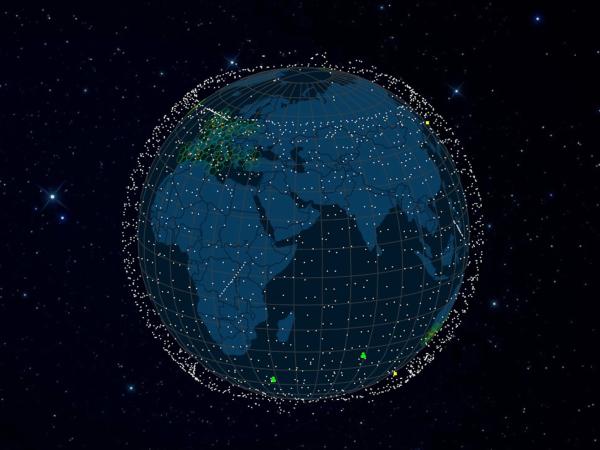
Starlink is changing the way people get online by using thousands of satellites to bring the internet to many places where cables simply cannot reach. Here is something you might not expect. Nearly 37 percent of the world’s population is still unconnected to the internet despite all our advances. Starlink’s coverage does not just promise faster speeds, it is flipping the script entirely by making high-speed access possible from the wildest mountains to the most distant road.
Table of Contents
- Understanding The Basics Of Starlink Network Coverage
- Why Starlink Network Coverage Is Important For Off-Grid Users
- How Starlink Network Coverage Operates: A Technical Overview
- Key Factors Influencing Starlink Network Coverage And Performance
- Exploring Real-World Applications Of Starlink Network Coverage
Quick Summary
| Takeaway | Explanation |
|---|---|
| Starlink provides global high-speed internet | The network’s satellite constellation offers access in remote locations where traditional services fail. |
| Ideal for off-grid users’ connectivity | Starlink enables consistent internet access for digital nomads and remote workers in underserved areas. |
| Satellite movement ensures continuous coverage | Satellites hand over signals as they orbit, maintaining strong connectivity without interruptions. |
| Phased-array antennas enhance performance | Ground terminals track multiple satellites simultaneously for improved signal and bandwidth efficiency. |
| Transformative for emergency response scenarios | Starlink offers critical communication during crises when traditional networks are down, aiding rescue efforts. |
Understanding the Basics of Starlink Network Coverage
Starlink represents a revolutionary approach to global internet connectivity, leveraging a constellation of low Earth orbit (LEO) satellites to provide high-speed internet access across vast geographical regions. Unlike traditional satellite internet services, Starlink operates a massive network of thousands of small satellites positioned much closer to Earth, enabling significantly faster and more responsive internet connections.
How Starlink Satellite Constellation Works
The Starlink network functions through a sophisticated array of satellites strategically positioned in low Earth orbit, typically between 340 and 570 kilometres above the planet’s surface. These satellites communicate with ground-based receivers, creating a mesh network that can transmit internet signals with minimal latency. According to SpaceX documentation, the constellation is designed to provide near-global coverage, with individual satellites continuously moving and handover signals to maintain consistent connectivity.
Key aspects of the Starlink satellite network include:
- Rapid signal transmission due to proximity to Earth
- Continuous satellite movement to ensure comprehensive coverage
- Advanced phased-array antenna technology for efficient signal routing
Global Coverage and Accessibility
Starlink’s ambitious goal is to provide internet access to regions traditionally underserved by conventional telecommunications infrastructure. By using a large number of satellites, the network can reach remote and rural areas where terrestrial internet services are limited or non-existent. Research from the International Telecommunication Union highlights the significant potential of satellite networks like Starlink to bridge the global digital divide.
The network’s coverage continues to expand, with ongoing satellite launches increasing the total number of operational satellites and improving global internet accessibility. Users in various geographical locations can now access high-speed internet through a compact ground terminal, transforming connectivity options for digital nomads, off-grid enthusiasts, and remote workers.
For more details about our Starlink solutions, explore how we optimise connectivity for mobile and adventurous lifestyles.
Why Starlink Network Coverage is Important for Off-Grid Users
Off-grid living demands reliable internet connectivity that traditional terrestrial networks struggle to provide. Starlink network coverage emerges as a transformative solution for digital nomads, remote workers, van life enthusiasts, and individuals operating in areas with minimal telecommunications infrastructure.
Breaking Geographic Connectivity Barriers
Traditional internet services are constrained by physical infrastructure limitations, requiring extensive cable networks or cellular towers. For off-grid users operating in remote wilderness, mountain regions, or isolated locations, these conventional connectivity methods are often impractical or entirely unavailable. According to global connectivity research, approximately 37% of the world’s population remains unconnected, creating significant challenges for remote workers and digital entrepreneurs.
Starlink’s satellite network circumvents these geographical constraints by providing direct satellite internet access, enabling connectivity in locations previously considered technologically unreachable. Key advantages for off-grid users include:
- Consistent internet access in remote geographical regions
- High-speed data transmission with minimal infrastructure requirements
- Reliable connection independent of terrestrial network limitations
Empowering Mobile and Flexible Lifestyles
The rise of digital nomadism and remote work has dramatically transformed how professionals approach geographical independence. Starlink network coverage enables individuals to maintain professional productivity from virtually any location, whether travelling in a van, working from a remote cabin, or exploring wilderness areas. Research from Global Workplace Analytics indicates that remote work has grown by 173% since 2005, highlighting the increasing demand for flexible, location-independent internet solutions.
For comprehensive mobile connectivity solutions, our team specialises in optimising Starlink installations for adventurers seeking seamless internet access across diverse environments. The network’s ability to provide reliable, high-speed internet transforms off-grid living from a connectivity challenge into an exciting, technologically empowered lifestyle choice.
How Starlink Network Coverage Operates: A Technical Overview
Starlink’s network coverage represents a sophisticated technological approach to global internet connectivity, utilising advanced satellite communication principles to deliver high-speed internet across unprecedented geographical ranges. The network’s operational mechanics differ substantially from traditional satellite internet systems, incorporating cutting-edge design and transmission technologies.
Satellite Constellation Architecture
The Starlink network comprises hundreds of small, interconnected satellites positioned in low Earth orbit (LEO), typically between 340 and 570 kilometres above the planet’s surface. According to IEEE Communications Research, this dense satellite mesh allows for continuous signal routing and minimal latency, creating a dynamic, responsive internet infrastructure.
Key technical characteristics of the satellite constellation include:
- Precise orbital positioning for comprehensive global coverage
- Advanced inter-satellite communication capabilities
- Rapid signal transmission and handover mechanisms
Signal Transmission and Ground Terminal Interaction
Ground terminals, commonly known as Starlink dishes, serve as the critical interface between satellite networks and end-users. These phased-array antennas dynamically track and communicate with multiple satellites simultaneously, ensuring consistent connectivity. Research from the European Space Agency highlights the technological innovation of these smart receivers, which can automatically adjust to changing satellite positions.
The communication process involves complex routing algorithms that select the most efficient satellite pathway, considering factors like signal strength, distance, and network congestion. This intelligent routing ensures users experience minimal interruption and maximum bandwidth, even in challenging geographical environments.
Explore our advanced satellite mounting solutions for optimising your Starlink network connectivity across diverse terrains and mobility scenarios.
Key Factors Influencing Starlink Network Coverage and Performance
Starlink network performance extends far beyond satellite technology, involving a complex interplay of environmental, technological, and geographical factors that directly impact internet connectivity. Understanding these critical elements helps users optimise their satellite internet experience and set realistic expectations for network performance.
Environmental and Geographical Constraints
The effectiveness of Starlink network coverage depends significantly on line-of-sight visibility and potential obstructions. Geographical terrain, vegetation density, and local atmospheric conditions can substantially influence signal quality and transmission reliability. According to NASA’s satellite communications research, atmospheric interference and physical obstructions represent primary challenges in satellite internet performance.
Key environmental factors affecting network performance include:
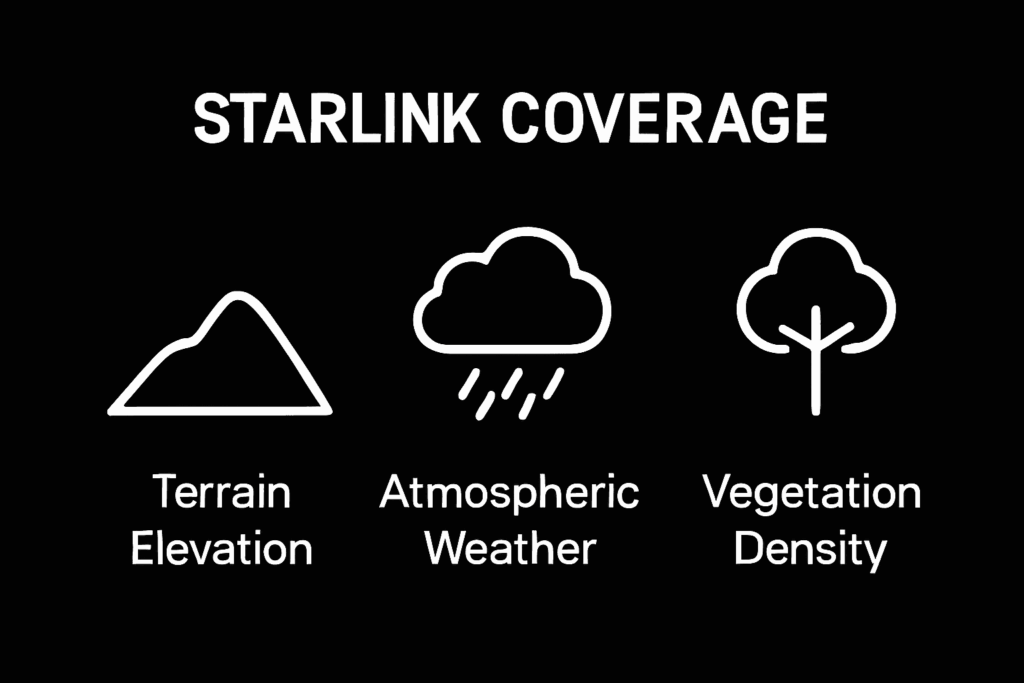
- Terrain elevation and landscape topology
- Atmospheric moisture and precipitation levels
- Presence of dense vegetation or urban infrastructure
- Local electromagnetic interference
Technological Performance Parameters
Starlink’s network performance is intricately linked to its satellite constellation’s technological capabilities. The number of operational satellites, their orbital positioning, and inter-satellite communication efficiency directly determine network coverage and data transmission speeds. Signal latency, bandwidth allocation, and network routing algorithms play crucial roles in maintaining consistent internet connectivity.
Our comprehensive guide offers insights into optimising Starlink installations for maximum performance across diverse environmental conditions. The network’s dynamic routing capabilities allow continuous adaptation to changing geographical and technological landscapes, ensuring resilient internet access for mobile and off-grid users.
Below is a table summarising the key environmental and technological factors that affect Starlink network coverage and performance, as described in the article.
| Factor Type | Specific Factors | Influence on Performance |
|---|---|---|
| Environmental | Terrain elevation, landscape topology | May obstruct or impede line-of-sight to satellites |
| Environmental | Atmospheric moisture, precipitation levels | Can cause signal attenuation and reduced reliability |
| Environmental | Dense vegetation, urban infrastructure | Physical obstructions affecting signal strength |
| Environmental | Local electromagnetic interference | May negatively impact signal quality |
| Technological | Number of operational satellites | Greater quantity enhances coverage and reduces latency |
| Technological | Satellite orbital positioning | Determines consistency and range of coverage |
| Technological | Inter-satellite communication, dynamic routing algorithms | Ensures efficient performance and adaptability |
| Technological | Signal latency, bandwidth allocation | Affects speed and reliability of user experience |
Exploring Real-World Applications of Starlink Network Coverage
Starlink network coverage transcends traditional internet connectivity, offering transformative solutions across diverse sectors and geographical environments. Its unique technological infrastructure enables unprecedented internet access in regions historically challenged by communication limitations, revolutionising how individuals and organisations operate in remote and challenging landscapes.
Remote Professional and Academic Connectivity
Digital professionals and academic researchers represent primary beneficiaries of Starlink’s expansive network coverage. The ability to maintain high-speed, reliable internet connections in traditionally underserved areas fundamentally transforms remote work and research capabilities. According to the International Telecommunication Union, approximately 37% of global populations lack consistent internet access, making Starlink a potential game-changer for professional mobility.
Key application domains include:
- Scientific research in remote wilderness locations
- Geological and environmental field studies
- Remote educational programmes in isolated communities
- Telemedicine consultations in rural healthcare settings
Emergency Response and Humanitarian Operations
Starlink’s network coverage provides critical communication infrastructure during humanitarian crises, natural disasters, and emergency response scenarios. Reliable, rapid internet connectivity becomes paramount when traditional communication networks collapse. Research from the UN Office for the Coordination of Humanitarian Affairs demonstrates that immediate communication can significantly reduce response times and save lives during emergency interventions.
Discover our mobile connectivity solutions designed to support professionals operating in challenging and dynamic environments. Starlink’s network represents more than technological innovation it embodies a lifeline for global connectivity, bridging communication gaps across unprecedented geographical landscapes.
Ready to Unlock Complete Starlink™ Coverage Wherever You Go?
If you have ever struggled with unreliable connectivity while living off-grid or travelling in your van, RV, or boat, you know how crucial consistent Starlink™ network coverage truly is. Many users like you face obstacles such as poor mounting options, challenging environments, and fluctuating network performance. At Starvmount, we transform these frustrations into seamless, practical solutions by offering expert hardware and guidance specifically for mobile and off-grid Starlink™ applications.

Why wait to experience uninterrupted internet wherever your adventures take you? Visit our main site to discover tailored mounting systems and power solutions that optimise your Starlink™ setup. Take the next step with cutting-edge solutions and guides designed for those who do not want to compromise on connectivity. Let us help you redefine what is possible with your Starlink™ coverage today.
Frequently Asked Questions
What is Starlink?
Starlink is a satellite internet constellation developed by SpaceX that aims to provide high-speed internet access worldwide through a network of low Earth orbit (LEO) satellites.
How does Starlink provide internet coverage?
Starlink utilises hundreds of small satellites positioned in low Earth orbit, which communicate with ground-based receivers to create a mesh network, enabling minimal latency and high-speed internet access even in remote areas.
What are the advantages of using Starlink for off-grid living?
Starlink offers consistent internet access in remote regions, high-speed data transmission, and does not rely on terrestrial infrastructure, making it an ideal solution for digital nomads and off-grid users.
How does environmental factors influence Starlink’s performance?
Environmental factors such as geographical terrain, vegetation density, and atmospheric conditions can affect signal quality and reliability. Maintaining a clear line of sight to the satellites is essential for optimal performance.